

Blog
Driving the future: How incentives and microgrid infrastructure will shape Singapore’s heavy vehicles electrification transition
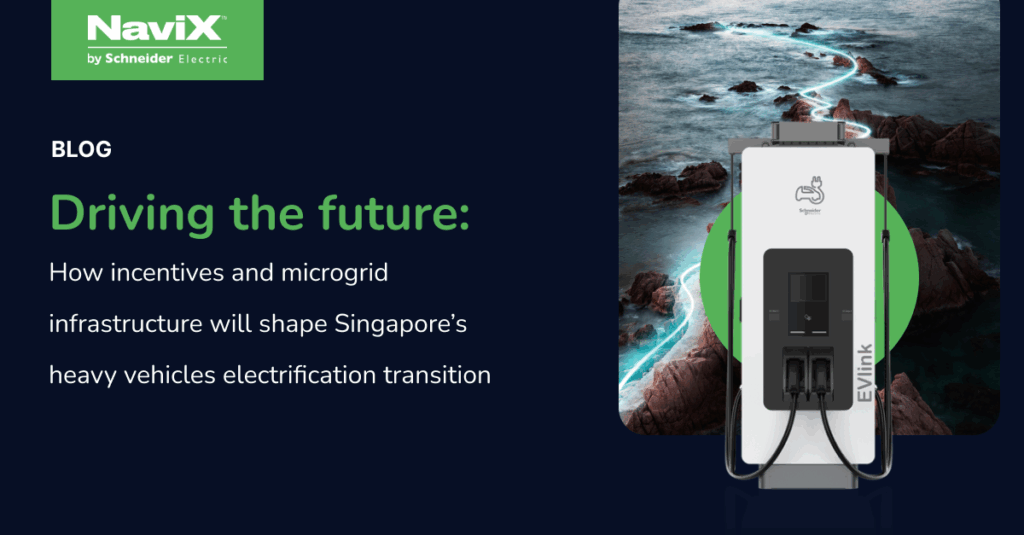
Incentives may lower upfront costs, but resilient charging and power systems will define long-term success. The businesses that prepare early will lead the next era of sustainable logistics.
Singapore has taken bold and steady steps in its journey towards net-zero by 2050. While passenger electric vehicles (EVs) have seen steady uptake, heavy vehicles such as cargo trucks, buses, and prime mover, present more complex challenges. These heavy vehicles are more expensive, require fast and reliable charging, and demand significant electrical capacity at depots and premises.
To bridge these barriers, the government has announced a suite of incentives for electric heavy vehicles (EHVs), starting from 2026. These initiatives are designed to close the cost gap with diesel, catalyse adoption, and future-proof the nation’s transport infrastructure.
Heavy Vehicle Zero Emissions Scheme (HVZES)
From 1 January 2026 to 31 December 2028, fleet operators can receive up to S$40,000 per electric heavy vehicle. The incentive is disbursed in tranches—S$13,000 at registration, another S$13,000 after one year, and the remaining S$14,000 after two years.
This support make some of the EV trucks in the market nearly cost-competitive with diesel, significantly lowering the financial hurdle for early adopters.
> View Grant
Electric Heavy Vehicle Charger Grant (EHVCG)
Charging infrastructure is another key focus. Under the EHVCG, businesses can receive 50% co-funding for charger installation costs, capped at S$30,000 per charger. The scheme covers the first 500 chargers nationwide, with a limit of three chargers per site, and applies to fast chargers (≥ 50 kW) installed at designated lorry or coach lots.
This programme ensures that early adopters of EHVs have access to the backbone infrastructure needed to keep operations running smoothly.
Industry Perspectives and Adoption Hurdles
While the schemes have been welcomed, several realities have been pointed out:
- Deferred demand in 2025: Some businesses may delay purchases until incentives kick in.
- Charger installation still costly: Electrical upgrades, grid connection fees, and high-voltage wiring add to deployment costs. In this case, businesses may look for alternatives like EV Charger as a Service to reduce the upfront capital investment needed.
Despite these challenges, the incentives are expected to spark momentum. Over time, increased demand should bring in more vehicle models, encourage global suppliers to participate, and reduce lifecycle costs.
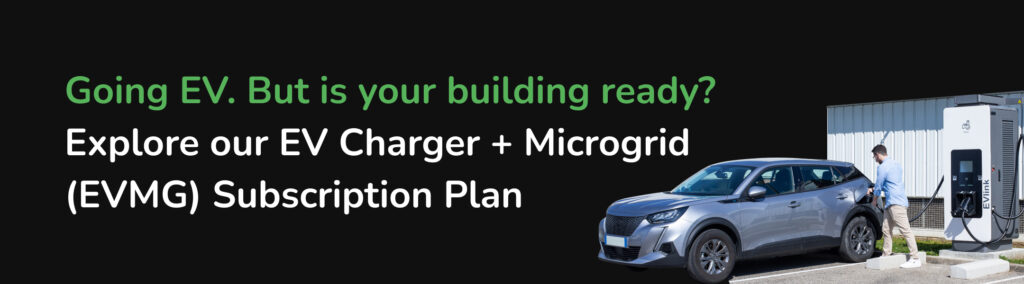
Is Your Building/Site Ready for EV Fleets?
For businesses, purchasing electric trucks and installing fast EV chargers is only half the journey. The real test lies in whether their buildings and depots can supply the power needed for charging.
- Load capacity constraints: Many buildings, warehouses and industrial sites were never designed for fast chargers, which can draw huge amount of energy, significantly increasing the peak load demand, potentially causing issues for the electrical grid.
- High cost of grid upgrades: Strengthening electrical connections often requires significant investment and coordination with utilities.
- Operational risks: Without reliable charging, even a well-planned fleet conversion could disrupt logistics.
This “hidden bottleneck” is a critical consideration for any fleet operator.
At NaviX Solutions, we believe in addressing this challenge head-on. Our expertise lies in:
- Load assessments to evaluate site readiness.
- Deploying Battery Energy Storage Systems (BESS) to manage peak demand and reduce reliance on costly grid upgrades.
- Building microgrids and smart energy systems that integrate solar, storage, and EV charging for long-term resilience.
- Offering a zero-upfront subscription-based model to ease the capital burden for businesses transitioning to zero-emissions fleets.
By ensuring power availability, we help businesses unlock a truly sustainable and operationally secure electrification strategy.
Looking Ahead
Singapore’s heavy vehicle incentives are more than subsidies—they are signals of where the future is heading. By 2026, fleet operators will face a transformed landscape where electrification is no longer optional but inevitable.
Those who prepare early, ensuring both their vehicles and premises are electrification-ready, will gain the dual advantage of government support and operational resilience.
At NaviX Solutions, we see ourselves not just as technology providers, but as partners in building that future—helping businesses overcome infrastructure challenges, optimise energy use, and embrace sustainability as a driver of long-term growth.
Learn more:


Driving the future: How incentives and microgrid infrastructure will shape Singapore’s heavy vehicles electrification transition

Incentives may lower upfront costs, but resilient charging and power systems will define long-term success. The businesses that prepare early will lead the next era of sustainable logistics.
Singapore has taken bold and steady steps in its journey towards net-zero by 2050. While passenger electric vehicles (EVs) have seen steady uptake, heavy vehicles such as cargo trucks, buses, and prime mover, present more complex challenges. These heavy vehicles are more expensive, require fast and reliable charging, and demand significant electrical capacity at depots and premises.
To bridge these barriers, the government has announced a suite of incentives for electric heavy vehicles (EHVs), starting from 2026. These initiatives are designed to close the cost gap with diesel, catalyse adoption, and future-proof the nation’s transport infrastructure.
Heavy Vehicle Zero Emissions Scheme (HVZES)
From 1 January 2026 to 31 December 2028, fleet operators can receive up to S$40,000 per electric heavy vehicle. The incentive is disbursed in tranches—S$13,000 at registration, another S$13,000 after one year, and the remaining S$14,000 after two years.
This support make some of the EV trucks in the market nearly cost-competitive with diesel, significantly lowering the financial hurdle for early adopters.
> View Grant
Electric Heavy Vehicle Charger Grant (EHVCG)
Charging infrastructure is another key focus. Under the EHVCG, businesses can receive 50% co-funding for charger installation costs, capped at S$30,000 per charger. The scheme covers the first 500 chargers nationwide, with a limit of three chargers per site, and applies to fast chargers (≥ 50 kW) installed at designated lorry or coach lots.
This programme ensures that early adopters of EHVs have access to the backbone infrastructure needed to keep operations running smoothly.
Industry Perspectives and Adoption Hurdles
While the schemes have been welcomed, several realities have been pointed out:
- Deferred demand in 2025: Some businesses may delay purchases until incentives kick in.
- Charger installation still costly: Electrical upgrades, grid connection fees, and high-voltage wiring add to deployment costs. In this case, businesses may look for alternatives like EV Charger as a Service to reduce the upfront capital investment needed.
Despite these challenges, the incentives are expected to spark momentum. Over time, increased demand should bring in more vehicle models, encourage global suppliers to participate, and reduce lifecycle costs.Incentives may lower upfront costs, but resilient charging and power systems will define long-term success. The businesses that prepare early will lead the next era of sustainable logistics.
Singapore has taken bold and steady steps in its journey towards net-zero by 2050. While passenger electric vehicles (EVs) have seen steady uptake, heavy vehicles such as cargo trucks, buses, and prime mover, present more complex challenges. These heavy vehicles are more expensive, require fast and reliable charging, and demand significant electrical capacity at depots and premises.
To bridge these barriers, the government has announced a suite of incentives for electric heavy vehicles (EHVs), starting from 2026. These initiatives are designed to close the cost gap with diesel, catalyse adoption, and future-proof the nation’s transport infrastructure.
Heavy Vehicle Zero Emissions Scheme (HVZES)
From 1 January 2026 to 31 December 2028, fleet operators can receive up to S$40,000 per electric heavy vehicle. The incentive is disbursed in tranches—S$13,000 at registration, another S$13,000 after one year, and the remaining S$14,000 after two years.
This support make some of the EV trucks in the market nearly cost-competitive with diesel, significantly lowering the financial hurdle for early adopters.
> View Grant
Electric Heavy Vehicle Charger Grant (EHVCG)
Charging infrastructure is another key focus. Under the EHVCG, businesses can receive 50% co-funding for charger installation costs, capped at S$30,000 per charger. The scheme covers the first 500 chargers nationwide, with a limit of three chargers per site, and applies to fast chargers (≥ 50 kW) installed at designated lorry or coach lots.
This programme ensures that early adopters of EHVs have access to the backbone infrastructure needed to keep operations running smoothly.
Industry Perspectives and Adoption Hurdles
While the schemes have been welcomed, several realities have been pointed out:
- Deferred demand in 2025: Some businesses may delay purchases until incentives kick in.
- Charger installation still costly: Electrical upgrades, grid connection fees, and high-voltage wiring add to deployment costs. In this case, businesses may look for alternatives like EV Charger as a Service to reduce the upfront capital investment needed.
Despite these challenges, the incentives are expected to spark momentum. Over time, increased demand should bring in more vehicle models, encourage global suppliers to participate, and reduce lifecycle costs.
Is Your Building/Site Ready for EV Fleets?
For businesses, purchasing electric trucks and installing fast EV chargers is only half the journey. The real test lies in whether their buildings and depots can supply the power needed for charging.
- Load capacity constraints: Many buildings, warehouses and industrial sites were never designed for fast chargers, which can draw huge amount of energy, significantly increasing the peak load demand, potentially causing issues for the electrical grid.
- High cost of grid upgrades: Strengthening electrical connections often requires significant investment and coordination with utilities.
- Operational risks: Without reliable charging, even a well-planned fleet conversion could disrupt logistics.
This “hidden bottleneck” is a critical consideration for any fleet operator.
At NaviX Solutions, we believe in addressing this challenge head-on. Our expertise lies in:
- Load assessments to evaluate site readiness.
- Deploying Battery Energy Storage Systems (BESS) to manage peak demand and reduce reliance on costly grid upgrades.
- Building microgrids and smart energy systems that integrate solar, storage, and EV charging for long-term resilience.
- Offering a zero-upfront subscription-based model to ease the capital burden for businesses transitioning to zero-emissions fleets.
By ensuring power availability, we help businesses unlock a truly sustainable and operationally secure electrification strategy.
Looking Ahead
Singapore’s heavy vehicle incentives are more than subsidies—they are signals of where the future is heading. By 2026, fleet operators will face a transformed landscape where electrification is no longer optional but inevitable.
Those who prepare early, ensuring both their vehicles and premises are electrification-ready, will gain the dual advantage of government support and operational resilience.
At NaviX Solutions, we see ourselves not just as technology providers, but as partners in building that future—helping businesses overcome infrastructure challenges, optimise energy use, and embrace sustainability as a driver of long-term growth.